On
Secrets, Ratfinks, and Freshman Composition
a
miscellany
Debra Valentino
Secrets
• a memoir
freshman composition
• poem
William Carlos Williams in the ETIC
• poems
Author's Note
 |
|
Secrets
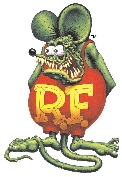
hey were made of solid plastic, and Richie used to collect them. They were small and hard and came in different colors, but most of Richie’s were red. I have no idea how he managed this. I had no notion of where his even came from in the first place, let alone how he managed to gather a whole handful, when I never really owned any. I had one troll that kept me busy for hours. Give me the troll and a box of Kleenex, and I created fashions, bedclothes, vacation resorts. And I still remember the one time my aunt bought me a Flintstones lick-and-stick book at Kresge’s. Man, did I love that! But there are details now that seemed to hold little consequence then, like costs and origins, and how privileged older siblings always seemed. My eyes taught me that they got more and would always have more, whether it was candy from the corner store, or the freedom to ride bikes whenever they pleased. I guess some things don’t always balance out, and some things remain mysteries forever. One thing that was no mystery to me was where to find the really cool stuff. Richie kept his in a shoebox with all his other teeny-bopper treasures. At the time, I had no idea that these little superheroes had been formed from liquid, popped out from molds, and mass produced, like so many of the trends that mark American commerce and our innocent childhoods. Even though they were ugly as hunchbacks, some might say that they all looked exactly the same. Yet for me, there was something curiously unique about each one. Something that seemed to infuse each of them not only with human characteristics, but more notably with endearing personalities — although every tail curled in exactly the same arch. Some might argue that they seem even better than real people. They were gratifying, well humored, gentle, and busy. Both — adorable and amazing. Richie also had an old cigar box he’d gotten from our grandfather, but it was mostly just filled with stamps that he had duplicates of. He often had two of one thing, and more than he could use, which was evidenced by parchment envelopes overflowing with stamps from foreign lands. I think he might have gotten the stamps from our grandfather, too, but I’ve never asked anyone, and I didn’t see. The good stamps were carefully tucked away in specific albums, though I never knew their divisions — or forgot them soon after hearing whatever they might be. He also had a tall stack of navy blue coin books, which made a bit more sense to me, and even got me, now and again, to check the year embossed on coins outside of the books. I remember seeing pennies in loafers, and wondering whether the year was one Richie already had in his collection. The stamp collection did seem intriguing, but too delicate to mess with, though this began to teach me the values of things, and how to discriminate one pleasure from another. Richie had so many interests, and would happily collect his way through graduate school in botany. Anything, of course, to divert his attention from the endless work our oldest brother and I were too responsible to dismiss. Richie, the consummate middle child, had Pick Up Sticks and marbles, too...and real, live turtles, which he painted numbers on and raced. Nothing nearly as curious, of course, as his pet chameleon that magically turned all sorts of unbelievable colors. I sometimes wonder what ever happened to the chameleon. There wouldn’t be any point in asking. Richie never gives a straight answer, and for all the facts running around in his head, he’s not one to recall the past. He’s always the philosopher. The one that taught me to think twice before posing a question to a broad thinking scientist. You might have a minute, but end up being there for an hour. Just tell me whatever happened to the chameleon, for crying out loud! Yes, Richie always kept himself occupied with wonder, even as he always ditched out on chores. On any leisurely day, he was sure to be found reading...or looking at things under his microscope. Trouble was, most days were leisurely to my brother, Richie. He was a slider and a hider, for sure. Our mom seemed to forget that he might lift a hand now and then, too. He could be off building tree forts or igloos, for all she cared. She was happy to let him explore the universe, knowing my oldest brother John would cut the grass, and I would clean the kitchen. But Richie couldn’t fool me. I was five years younger, but I knew his game...and I also knew that he kept the prized shoebox in his top left desk drawer, right next to his Superball and love notes from Nancy Richter. Of course, at the time, I didn’t notice the serendipity between “Richard” and “Richter”; probably because “Richter” was pronounced with a /k/. Back then, I couldn’t see things beyond the way they sounded. Of course, Nancy was the hottest thing in the seventh grade. She had hair perfect for flaunting, unavoidably present in all the songs, magazines, and TV commercials of the time...just like "Lady Godiva." All of that long, flowing, blonde hair. Think of all the Sun-In! What a burden it must have been. Much like her constant phone calls were to me. She used to call the house and go, “Oh, hello. This is Nancy Richter. May I please speak to Richie,” all breathy and cooing, as if she had just rolled off the Mattel assembly line. My Chatty Cathy didn’t even sound that sweet. Yet, her pubescent Mae West impression always managed to lure my brother out of the house...which was fine with me, because that’s when I would sneak in and play with the Ratfinks. Ratfinks were so cool. They made you feel so happy; you would smile just looking at them. Such extraordinary creatures; so devilish with their tiny pointed ears, little potbellies, and rhinestone eyes. Tiny little contradictions, both tender and sinister at the same time; so complex in their simplicity. Totally boss. And they wore t-shirts, of all things, which was entirely rad. T-shirts in the same colors as their little, stunted bodies, and just kind of molded onto them. Nothing really ornate. Just the little jeweled eyes, twinkling, you might say — unless you counted the faint lines they had etched into their half-inch bodies, as to give the illusion, apparently, of being hairy, or animal-like. They actually seemed more real than Nancy Richter, and cuter too. And their voices made you giggle with delight. Not that they had voices, exactly. But you knew that if they had them, they would be comical, though surely more sincere than Nancy Richter’s fake sexy voice. Ratfinks might sound a little like the Chipmunks, only probably deeper and less nasal...though I don’t much know the difference between a rat and a chipmunk. While the Chipmunks were boyish, the ratfinks were manly. A more sophisticated type of comedy. This I knew, somehow. Ratfinks did, of course, have shorter legs than Nancy Richter, but they didn’t wear any stupid nylons underneath any even stupider short skirt. Although Ratfink legs were stumpy and shorter than their bodies, you could still stand up the Ratfinks on their flat, teeny-weeny feet. In fact, Ratfinks were meant for standing. They just stood there like they were going to kick some major butt. The best part was, I knew it wouldn’t be mine. I always felt that the Ratfinks liked me a whole lot better than Richie ever did. He would just kill me if he ever caught me, but I was curious, too. Sometimes, while I was playing with and talking to the Ratfinks, I would pick up the erasers and smell them, announcing that these erasers, above all, were “not to be touched by anyone, neither witch nor warlock” acting as the grand Ringmaster Ned from Bozo the Clown, borrowing the “witch” and the “warlock” idea from Agnes Morehead, the cackling mother, Endora, of Samantha Stephens in Elizabeth Montgomery’s “Bewitched.” These off-limits erasers were exclusive parts of Richie’s collection — translucent, and in two colors — green and pink. One of the most marvelous things about these well-protected pieces was the fragrance they held — a cross between fresh latex and aloe, only way better. It’s so difficult
Each of the erasers was precision cut in a rectangular block about the size of an ice cube. They were a little firmer than Creeple-People, but not edible like the rather similar "Incredible Edibles" claimed to be. The erasers were nestled in the box with the Ratfinks, some Cracker Jack tattoos, Bazooka comics, a few clickers, and my brother’s prized Duncan yoyos. All I had in my room was that one favorite troll, a toy record player, and some dress up clothes. No one ever thought to give me all this cool stuff my brother thought he had secured from me. Still, I was always smart enough to know just what time Richie would be due home. I would be waiting in the utility room like a prowler: “Hum Tee Dum Dum.” As soon as he stood solid, inside, with the back door closed behind him, I would pop out from behind the dryer, tug on the tassel of his stocking cap, and chant, “How’s Nan-cy?” He’d say, “Beat it, Brat!” I’d follow him into the kitchen sing-song-ing, “How’s Nancy? How’s Nan-cy Pant-sy?” He would ignore me. “Are you going to take her to the fancy dance-y?” My older brother, straining to have to bother even to notice me, would end up asking, “Ya know what you are?” To which I would answer swiftly, “Better than you are!” “Nope,” he’d offer, “You’re a BRAT. B-R-A-T...BRAT! Brat, brat, brat, brat, brat!” For all I knew, he didn’t actually know my real name. But I would take his ignorance in good stride, wiggle my nose, bobble my head, always ambushing him in the end with, “And you’re a RAT FINK! Ratfink! Ratfink! Ratfink!” freshman composition one boy wrote
so much depends
A Saved Document so much depends Author's Note: Graham has always been one of my favorite colleagues, and really one of my favorite persons. He was a compelling complex of delightful contradictions, and so I wanted to write a piece solely dedicated to his cherished memory. What I discovered is that grief and writing have their own contradictions to reconcile, and every attempt turned out to be a poem that demanded more time than has passed since his unexpected death. Or, maybe it was Graham’s modesty, telling me not to make a fuss over him. He might never have known how much he meant to each one of us. In thinking about Graham, I remembered this piece, written back in 1981 in Carolyn Forche’s creative writing workshop at the University of Arkansas in Fayetteville. For his lifelong love of writing — and since Arkansas, workshops, and Ratfinks are all emblematic of his playful spirit...and because Graham was like a brother to me, I offer “Secrets.” Graham’s leaving us at midterm is testament to his sense of humor, and to just how cool he was. As I worked to grade student papers in the days following Graham’s death, his memory became ever more palpable. Graham and I often commiserated about our work, about the things that mattered to us, and about the challenges of our jobs as adjunct faculty members. Toward this end, I offer “freshman composition,” a poem originally titled, “teaching my heart out,” and composed the day after the NIU shootings in February 2008. It is a poem that is dear to me because every stanza catalogues a pivotal moment in my experience as a teacher. Students...freshman composition...poetry...things that are dear — a small window into the unforgettably human Graham that we all love and miss. —DAV
|