|
Barry Hudek |
|
|
||
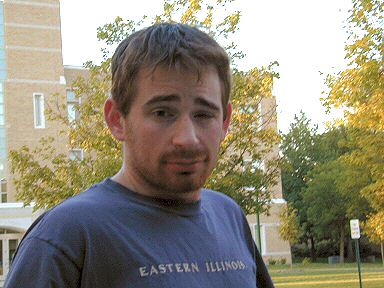
“I can recall no time when American education
was not in crisis.” -John Searle, 1990
he humanities are in dire crisis!” “The job prospects for PhDs are bleak!” “Kids today don't want to read or write, just play video games and watch movies!” “Literature has no value any more!” “The printed word will soon be completely replaced by electronic media!” All of these statements, so deflating to eager students entering MA and PhD programs in English, can readily be heard within academic walls or seen in print. While such alarms may seem exaggerated and evoke images of Chicken-Little, they do represent some truth. The reality remains that there is a crisis in the humanities, and navigating to fact from the rocky shoals of fictional doomsday language can be difficult. But any student entering the academic arena must understand the nature of this crisis, the prospects for future employment, and, ultimately, whether continuing his or her education is the best path before beginning the voyage. This research examines what this crisis is all about, how literature can be significant in a society valuing scientific research and economic practicality, and what skills are necessary in obtaining full-time employment in a difficult job market. Beginning this research, one finds some writers are conveying a grey-dead, near nihilistic fatalism regarding the apocalyptic future. However, digging deeper, the research indicates hope is not yet abandoned by all. Those entering graduate school can take heart that there is a future for us, but it will require some stretching and extra effort to supplement our literary training. Any beginning graduate student knows full well that American society is being transformed by technology. Inundating all levels of society, electronic media have become enemy number one for many within the discipline. Movies, music and computer technology have corrupted current students, making them hostile to anyone extolling the virtues of a protracted exploration of literature. Well, at least that is what some will tell you. While many believe technology will erode students' interest in literature, research indicates that enrollment in English classes is still strong; incoming students still know that English is the only discipline in which one can read books, not just textbooks, leading Leroy Searle to state, “we could offer almost any course we teach, even at 7:30 in the morning in a rehabilitated boiler room, and it would fill up” [1](1). In “Days of Future Past,” Michael Bérubé further claims,
While enrollment is still strong, technology and its effect upon the classroom are still points of contention within the crisis. And according to the doomsdayers, it won't be long until the unwashed hordes, who have always owned a computer and have relied heavily upon electronic entertainment, enter the university surely signaling the end of the printed book as we know it. Many will know, too, that the 1990s experienced a cultural civil war that has had far reaching effect upon the educational world. Both Right and Left have waged a heated conflict over the canon, multiculturalism, and literary theory, to name a few of the hot-button issues. These cultural wars have left bitter, polarizing remnants that are still haunting higher education and political discourse today. The rhetoric of the Culture Wars has influenced public opinion as well, causing many to question the role higher education plays in America. Linda Pratt's “In a Dark Wood” expounds on this idea. Showing data from a recent survey, she states,
While these presentments do show part of the crisis, they also point up one of the contradictions surrounding this debate. This sentiment is clearly genuine, but as Searle and Bérubé point out, enrollment is still strong, and on some level, beginning students still show an interest in literature and writing. Furthermore, if we as educators can break through this supposition, applauding the values of both vocational training and a liberal education, we, as James Joyce says, can eat our cake and have it. Searle argues that if we can get students excited about reading and thinking in the composition levels we can break this mode. He further says, “The irony is that people who do get an education, not just vocational training, do have fatter bank accounts and fuller lives, but only because they learned how to think, they learned how to learn, they learned how to read the world as a place subject . . ." (8). External forces are not the only parts of the crisis in and among themselves; they have created internal struggles as well. The surging political debate of the 1990s centered on the proliferation of literary theory. While this explosion of new theory opened several new avenues for examining literary texts, it paradoxically created a crisis of confidence within English departments. The multiplication of new theories crumbled any notions of truth within literature and changed the nature of reading texts into one of exploring them as cultural artifacts. This phenomenon then led English to be viewed in similar veins as anthropology, history and sociology, leading many students into those disciplines directly. As Pratt says,
Students who may have been interested in literature turned away from a discipline that could no longer sustain universal goals. Here the navigation gets slippery. Pratt rightly suggests that shifting emphasis has created institutional changes, but the numbers put forth by Bérubé suggest improved enrollment. How then can enrollment be strong and theory have estranged students from the discipline? Bérubé maintains that both sides are correct. While no significant decline occurred because of the expansion of theoretical exploration, it did not dramatically improve interest either (“Future Past,” 22). Changes in academic labor practices have contributed to the crisis as well. More students are entering university gates, swelling enrollment in lower level classes. Departments have responded by allowing teaching/graduate assistants and itinerant faculty to handle the bulk of this increase, freeing tenured teachers to remain in their areas of interest. The problem, however, is that the majority of students in English are in the lower levels and as more teachers are needed, the openings are being filled by part-time and non-tenured persons. Furthermore, many departments are expecting more out of their teaching assistants. While this shift has allowed older faculty to continue teaching in their subjects, by separating themselves off from lower level classes, it has also opened the door for loss of tenure track positions for future PhDs. Pratt explains,
Cary Nelson and Michael Bérubé suggest that universities begin offering better benefits for graduate students, including increased wages and health care. They further suggest that English departments must restrict entrance to doctoral programs, thus helping alleviate the current logjam ( Higher Education , 22-23). Returning to the nature of the crisis at large: one of the changes of the electronic revolution, coming out of the aftermath of the culture wars, is doubt as to the place and value of literature. It has become more and more difficult to justify studying literature in a culture that is increasingly valuing vocational training and scientific research. The public's perception has changed over the last fifty years. Parents now want their children to compete in the business world, feeling that higher education should play a leading role in training instead of personal edification. Many politicians and cultural critics decry the theory problem as well. They feel that the expansion of theories has alienated many students. But in spite of pressures from science and technology and public perceptions, Searle is convinced students young and old still value good literature. He says,
For Searle, then, no matter the current crisis, no matter the rhetoric saying otherwise, students are, and will always be, interested in self-improvement through education and increased knowledge. The student will always be there, and thus teaching will always remain, since students need a guide in understanding difficult texts and achieving educational enlightenment. The student may be changing, but the student can be reached. We must recognize this and adapt accordingly. What then is the place of English and literary studies within this paradigm? Can literary value be resurrected in the electronic age? If value can be ascribed, can people predisposed against literature be convinced otherwise? Searle contends that
Likewise, in Literary Culture in a World Transformed, William Paulson offers an excellent compromise on this dilemma, satisfying both the demands from the Right and Left, fusing print culture with electronic media. He suggests a via media, or middle ground, that refuses a “fatalistic or providential view on technology, maintains cultural contact with the past, and whose teaching mission is not that of training an academic counter-society of cultural critics” (xi). Paulson further maintains that this mission should be one which makes "the strangeness and multiplicity of literary culture part of an always interdisciplinary or a-disciplinary education of world citizens — in all the world's dimensions” (xi). Paulson then has no problem incorporating multiculturalism and the canon while depoliticizing the university, creating peace for tenured radicals and conservative political opponents. This thinking is precisely what we need as we enter the twenty-first century academic world: one that incorporates technology but does not bow to it either, one that ends the polarization of American culture on the Culture War debate. Searle and Paulson tell us that the future English teacher then needs a healthy balance between students' interests and the enriching value of literature. Paulson maintains, “We cannot and should not try to preserve intact the order of print culture; neither should we rush to assume that because electronic and audiovisual culture is the next big thing it is the only thing” (13). As future guardians of culture, we should not let the next generation of students dictate policy. Like a good parent, we should stand up for what we know to be of value, regardless of the students' supposed beliefs. Neither should we ignore where the students are coming from. Instead the future educator should use both electronic media and written works, bridging the gap between “high” and “popular” cultures. Professors should use the students' interests as a vehicle to higher literary texts. Searle again is relevant. He says, “Let's see what happens if we take the object of literary study to be not a privileged list of books (it would help us, I think, if we banned the use of the word “canon” for about 800 years), but as the attainment of critical literacy ” (11). Critical literacy then can be achieved not just through great books, but through any means necessary, whether it comes from Hamlet (the play) or Eternal Sunshine of the Spotless Mind (the movie, not the literary reference), so long as professors in English are striving to affect students' lives. How then can non-literary people be convinced of what the profession already knows? George Yudice's The Expediency of Culture provides strong answers. He suggests that culture can be viewed as a commodity and can be shown to politicians and business leaders to have fiscal worth. While Yudice's cultural definition includes many things, literature and the printed word are among what he calls culture. He examines further the role of “high” culture, in the form of museums, libraries and theaters, and their effect on urbanization. In that these agencies of culture draw people to cities, they therefore create tourism and capital. He writes,
For Yudice then, governmental officials need to see the economic side of publishing literature and popular fiction, and be convinced it is a worthy investment. If this can be achieved, the problem of justification can be solved while, at the same time, insuring future funding and development from sources which once overlooked our endeavors in favor of scientific and empirical research. If this cannot be done, however, Bérubé, Nelson and Searle argue that the research model for literature must be changed, and that basing tenure on the scientific research model is unfair to a discipline whose research is extremely different from its scientific counterpoint. If the political powers can be convinced that culture has value and can be used as an economic exponent, and the research model for literature changes, the crisis can be alleviated. Furthermore, given the changes in publishing and what English departments and universities are looking for in candidates, prospective practitioners need to develop a multitude of skills, offering departments an array of abilities and interests. Like a utility infielder in baseball, capable of playing many positions, we, too, should be open to a variety of fields. Specialization in a given field without generalized instruction will not be attractive to search committees or department chairs required to fill a plethora of needs with limited resources. Instead, the next troupe of English aficionados should tailor their education with this in mind. We should be looking at courses outside of English and literary studies as well, combining the latter with classes in pedagogy and educational instruction while learning about the great evil, technology. We must learn about websites, PowerPoint, video-feeds, smart-boards and anything else about technology that can enhance our teaching presence in the classroom and capture the students' interest. An attractive pedagogical repertoire can only further enhance our chances of success postdoctorally. Community colleges have long put an emphasis on teaching over publishing, and such thinking is seeping into the storied halls of universities as well. Many publishing houses are turning away from books about the humanities in the wake of slumping sales. Therefore, we must improve our abilities to teach. Turning to the future job prospects for PhDs, the Internet and other writings paint a picture like one of Picasso's: visible, but disjointed: you can decipher it, but it is not completely clear. Gabriella Montell writes,
The increase of jobs is clearly a positive, but with the hiring of what many departments call “advanced assistant professors,” our prospects get dimmer. These potential employees already have several years of part-time and adjunct teaching that newly minted PhDs cannot compete with. However, all is not lost. Montell further writes,
These numbers, even though given in 2001, are encouraging. Furthermore, I do not think they reflect the utility infielder idea already mentioned. It would be interesting to see how a diverse education and technological training impact these numbers. Furthermore, many universities are encouraging new PhDs to consider community colleges and the private sector. Placement offices are offering this advice sooner, rather than later, giving candidates plenty of time to evaluate their options, which is a nice switch from previous practice. While all this seems obvious, it was not the practice of the majority of PhD-granting institutions according to Bérubé and Nelson (Higher Education , 22-23). So, then, if we are willing to explore alternative employment options and are willing to wade through non-tenure, part-time positions before landing the plum assignments, perhaps we should look into buying sunglasses for our bright futures after all. To study or not to study is the question, then. Should the eager masses of hopeful graduate students suffer through years of abject poverty with uncertainty awaiting on the other end of the PhD tunnel? Future hopefuls should be wary of those espousing doomsday views because there are those advocating calm, reasoned approaches to our future. In examining the heated debate surrounding the future of the humanities and the future of literary studies, graduate students should not surrender their aspirations, but continue with caution. By tempering their literary studies with courses in education, and with training in technology, coupled with retailored ideas on their own curriculum, graduate students can dramatically enhance their career prospects. Literature cannot be surrendered to the technological juggernaut. Neither should literary studies bury its head in the sand, refusing to accept the future. Rather, English majors should embrace technology and utilize popular culture, coupling them with great books in building a well-read citizenry. It will not be easy, but with hard work and determination our generation can successfully navigate the seas of uncertainty, safely anchoring in the harbor of future employment. Bibliography Bateson, F.W. The Scholar Critic: An Introduction to Literary Research. London: Routledge and Kegan Paul, 1972. Bérubé, Michael and Nelson, Cary. Higher Education Under Fire: Politics, Economics, and the Crisis of the Humanities. New York : Routledge, 1995. Bérubé, Michael. The Employment of English: Theory, Jobs and the Future of Literary Studies. New York : New York UP, 1998. Bérubé, Michael. “Days of Future Past.” ADE Bulletin 131. Spring 2002 20-26. Bloom, Allan. The Closing of the American Mind. New York : Simon and Schuster, 1987. Cain, William, ed. Teaching the Conflicts: Gerald Graff, Curricular Reform, and the Culture Wars. New York : Garland Publishing, 1994. Fish, Stanley. Doing What Comes Naturally: Change, Rhetoric and the Practice of Theory and Legal Studies . Durham : Duke University Press, 1989. Fish, Stanley. Professional Correctness: Literary Studies and Political Change. Oxford : Clarendon Press, 1995. Glasser, William. Reclaiming Literature: A Teacher's Dilemma. Westport: Preager, 1994. Graff, Gerald. Beyond the Culture Wars: How Teaching the Conflicts Can Revitalize American Education. New York : W.W. Norton, 1992. Graff, Gerald. Clueless in Academe: How Schooling Obscures the Life of the Mind. New Haven : Yale UP, 2003. Graff, Gerald. Professing Literature: An Institutional History. Chicago: U of Chicago Press, 1987. Kaufman, Walter. The Future of the Humanities. New York : Readers' Digest Press, 1977. Kernan, Alvin, ed. What Happened to the Humanities? Princeton: Princeton UP, 1997. Laurence, David. “The Latest Forecast.” ADE Bulletin 131. Spring 2002, 14-19. Levine, Lawrence. The Opening of the American Mind: Canons, Culture and History. Boston : Beacon Press, 1996. Montell, Gabriella. “English Ph.D.'s Continue to Face a Tough Market.” The Chronicle of Higher Education, December 21, 2001. Retrieved December 7, 2004 from <https://chronicle.com/jobs/2001/12/2001122101c.htm> Nelson, Cary. The Manifesto of a Tenured Radical . New York : UP, 1997. Nelson, Cary. Will Teach For Food: Academic Labor in Crisis. Minneapolis: U of Minnesota P, 1997. Paulson, William. Literary Culture in a World Transformed: A Future For the Humanities. Cornell: Cornell UP, 2001. Pratt, Linda Ray. “In a Dark Wood: Finding a New Path to the Future of English.” ADE Bulletin 131 Spring 2002, 27-33. Searle, Leroy. “Literacy and Legitimation: The English Department in a Changing University.” Paper presented at the 2001 ADE Summer seminar at Lehigh University. Reproduced for English 4775 at EIU, by permission of the author. Woodring, Carl. Literature: An Embattled Profession. New York : Columbia UP, 1999. *** |
|